
Office chairs for back pain, built around you
If back pain, sciatica or another painful condition is making it hard to sit comfortably at work, it’s likely you need a chair that specifically fits your needs.
Ergochair designs and builds individually configurable office chairs around the way you sit, the support you need and the work you do.
From subtle adjustments to highly bespoke one-off seating, we will work with you on a solution that supports you in the right places and helps you work more comfortably.
Office chairs to help with:
- Back pain
- Lower-back/lumbar pain
- Sciatica
- Scoliosis
- Coccyx/tailbone pain
- Arthritis
- Disc problems
- Complex postural needs

There’s no “best chair” for back pain
If you’re searching for the best office chair for sciatica, lower back pain, scoliosis or another condition, it’s tempting to look for a chair designed specifically for that diagnosis.
But Lisa Harrison, an Occupational Therapist, 30 years’ experience advises that two people with the same condition may often need very different support.
The right chair depends on you, your body, where you experience discomfort, how you sit, the work you do and what helps you feel comfortable.
That’s why at Ergochair, ergonomics is personal.
Is your current chair part of
the problem?
Back pain isn’t always caused by your chair. But if sitting at your desk consistently makes you feel worse, then your setup is worth a closer look.
How can you tell if your chair is making things worse?
- Your pain or discomfort builds as the day goes on
- You find yourself constantly shifting or leaning forwards to get comfortable
- Your chair doesn’t offer support in the right places
- You experience pressure, aching or numbness around your hips, thighs or the backs of your legs
- You can’t sit comfortably for as long as you used to
- The chair doesn’t feel like it fits you properly
If your chair is the problem, sometimes the cause is surprisingly simple. Your seat may be too deep. Backrest in the wrong position. Your armrests may be forcing you into an awkward posture. Or your chair may have adjustments you’ve never been shown.
Even the right chair can still feel wrong if it isn’t set up properly. When you choose Ergochair, we don’t just deliver and leave you to figure it out. We help you set it up properly, show you how to use it, and make sure it’s helping you the way it should.
Before you replace your chair, try
adjusting it
Small changes can sometimes make a big difference to how comfortable you feel.
Start with the basics:
- Seat depth: Make sure the seat isn’t pressing into the backs of your legs or leaving your legs unsupported
- Backrest: Adjust it so you feel supported through your back rather than sitting away from it
- Armrests: They should support your arms without forcing your shoulders upwards
- Movement: If your chair has a free-float or reclining mechanism, try using it rather than staying locked in one position all day
- Desk setup: Check that your keyboard, screen and other equipment aren’t encouraging you to lean forwards and/or look up or downwards
If you’ve worked through these basics and you’re still experiencing persistent pain or discomfort, that’s the point to look more closely at whether you need more specialised support.
The best sitting posture is the one that’s most comfortable for you at that moment in time. You’ve got to be able to move and change.

Regular movement can help with back pain caused by sitting
Break up long periods of sitting by reclining slightly, sitting more upright, standing, stretching, walking or switching tasks where possible, advises Lisa Harrison, Occupational Therapist.
Lisa uses a simple reminder: Every 20 minutes, make a small change. Stand, stretch, walk. Avoid sitting still for long periods.
Why Ergochair
- Specialist tailored seating
- Individually assessed
- Made in the UK
- Over 100,000 chairs sold
- King’s Award winner in 2026 for Innovation
Working with this company has been a great experience. They've kept me in the loop throughout the entire process and have shown that they truly care about their customers' comfort and wellbeing.
When is a standard office chair no
longer enough?
Occupational Therapist Lisa Harrison says it may be time to look at something more specialist if:
- Your pain persists despite making basic adjustments
- You have specific postural needs that a standard chair can’t accommodate
- You have limited mobility, strength or endurance
- You experience pressure sensitivity or numbness
- You need support in a very particular area of the back or body
Or you may need a specialist chair if you are managing a condition such as sciatica, scoliosis, arthritis, a prolapsed disc or persistent coccyx or lower back pain that affects the way you sit or move. Inadequate seating can affect concentration and productivity, not just physical comfort.
“At that point,” says Lisa Harrison, “the question stops being ‘which chair has the most support?’ and becomes, ‘what kind of tailored support does this person need?'”
Struggling to find a comfortable fit?
People know their bodies and what their requirements are really well a lot of the time. They just need a little bit of assistance to get to the right product.

What happens in an Ergochair seating assessment?
An Ergochair specialist seating assessment considers your condition, body dimensions, mobility, where you experience pain or pressure, how you sit, the work you do and the setup around you.
We take the time to understand what your working day actually looks like, what feels comfortable for you, what doesn’t, and what you’ve already tried.
We won’t rush into a product recommendation. We want confidence that we’ve understood the problem before we decide what the solution should be.
Every Ergochair assessment is personal because our chairs are configured around unique needs.
A good assessment is a collaboration. The person knows their own body better than anyone else; my job is to listen, understand what is and isn’t working, and use that information to find the right solution.
There isn’t a perfect chair for someone with scoliosis, sciatica, or lower back pain. There is a good assessment that helps identify the features that are going to support that individual to do their job.
How Ergochair adapts chairs to
their user
Once we understand what is making you uncomfortable, we can shape a chair around your needs. That might mean:
- Positioning lumbar or back support at the height that feels right for you
- Changing the seat depth, width or dimensions
- Using different foam constructions to alter firmness
- Shaping the backrest around specific contact points
- Reducing pressure around sensitive areas such as the coccyx
- Or combining several smaller adaptations to create the right overall fit
Our adaptability is what allows Ergochair to accommodate people whose needs can’t be easily met by standard office chairs.
Sometimes the change is small, but the difference to your everyday working life can be huge.
Struggling to find a comfortable fit?
For years I have struggled to get comfortable when sitting down due to a connective tissue disorder. The Ergochair Adapt 600 with V-Trak headrest is fitted to support my body. The chair is eminently adaptable and I cannot speak highly enough of the sales director and the product.
Explore Ergochair seating for back
pain and complex postural needs
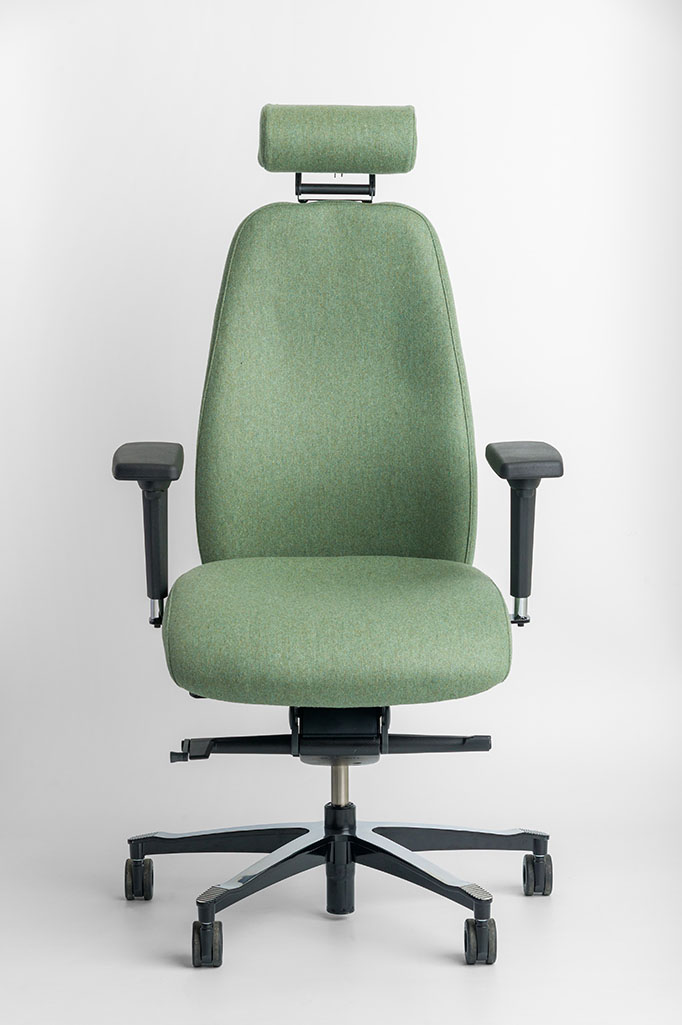

Adapt v600
Explore Adapt v600
ZentoSmart
Explore ZentoSmart
Targeted adaptations
Explore Targeted adaptationsStop guessing what your body needs
If sitting at work is making you uncomfortable, you don’t need to work out the answer on your own. Let us help you.
Tell us what’s happening. We’ll help you understand what support you need, whether your current setup can be improved or whether a more specialist chair might be the right next step
Talk to an Ergochair expert
If back pain or movement symptoms are severe, worsening, or associated with other changes or concerning symptoms, please seek medical advice.
Frequently asked questions
Can an office chair fix back pain?
A chair isn’t a treatment for back pain, and there isn’t one type of seating that will solve every condition.
Is lumbar support good for lower back pain?
It can be, but more lumbar support isn’t necessarily better.
Is a firm or soft office chair better for back pain?
There isn’t a single correct level of firmness. Some people need greater pressure relief, while others benefit from firmer support in particular areas. The seat and backrest need to provide the right combination of support and comfort for your body, condition and working day.
Can an office chair help with coccyx or tailbone pain?
The right seating can help reduce pressure around the coccyx, but the solution depends on the individual.
How often should I move if sitting aggravates my back?
There is no single perfect posture to hold all day. Changing position and moving regularly is important.
What if I get back pain while working from home?
Your postural and seating needs don’t change just because you’re working at home.
Can specialist seating help with arthritis, disc problems or neurological conditions?
Potentially, yes. But the chair should be based on how the condition affects the individual, not simply on the name of the diagnosis.