

Adapt 700: Bariatric and heavy-duty office chairs for larger users
Bariatric office chairs are designed for people who need larger dimensions, enhanced support or greater weight capacity than standard office seating provides. Ergochair’s Adapt 700 is a specialist, high-capacity chair that combines strength and durability with the sizing, support and adjustability needed to achieve a genuinely comfortable fit.
That’s why we are one of the UK’s leading manufacturers of specialist seating, working with individuals, employers and workplace assessors to create chairs that fit properly and support people comfortably.
It’s not just a bigger chair. It’s about accommodating that person’s specific body dimensions in an appropriate way.


What does a bariatric chair need to do?
A bariatric chair is designed for individuals with larger body dimensions. It needs to accommodate an individual in a way that helps them feel comfortable, secure and properly supported throughout the working day.
“It must enable the user to sit down and stand up with confidence and minimal effort,” says Lisa Harrison, an Occupational Therapist with 30-years of experience. “That means looking beyond weight capacity to factors like seat width and depth, back support, ease of movement and how comfortably they can get in and out of the chair.”
The objective is simple. A chair that fits the person properly and enables them to get on with their work without becoming a source of discomfort or restriction.
You quickly learn there’s a great difference between a bog-standard entry level chair and the type Ergochair produces.

Weight capacity doesn’t tell you whether a chair will fit
Searching for a 150kg, 200kg or 250kg office chair is a sensible place to start. But a suitable weight rating doesn’t guarantee a suitable chair. A heavy-duty chair may meet that requirement but still leave the person restricted, uncomfortable or poorly supported.
That’s why the dimensions and adjustability of the chair matter just as much as its maximum weight capacity. The right bariatric chair needs to support the person, but it also needs to fit their body properly.
How do you know your current
chair doesn’t fit properly?
You may notice the seat feels too narrow around your hips or legs, that you feel compressed or restricted, or that you can no longer sit comfortably for as long as you used to.
Other signs include:
- Discomfort or pain during the working day
- Feeling poorly supported by the seat or backrest
- The chair sinking or struggling to hold its height
- Armrests or other components feeling strained when you use them for support
- These are signs that the chair may not be providing the fit and support the person needs.
These are signs that the chair isn’t providing the fit and support the person needs.
The right seating should give you the space, support and stability to sit comfortably, helping you stay focused, confident and productive throughout the working day.
How do we fit the right
bariatric chair?
A well-fitting bariatric chair needs to work with the person’s body and allow dynamic movement, not just support their weight and hold them in the same posture all day.
That means getting several things right at the same time:
- Seat width: Enough space to sit comfortably without feeling compressed or restricted
- Seat depth: Enough support through the thighs without putting pressure behind the knees
- Back support: Positioned and shaped to support the person where they need it
- Armrests: Set at the right height and width so they support movement rather than restrict it
- Stability and movement: A chair that feels secure, but still allows the user to change position comfortably
- Getting in and out: The chair needs to support safe, comfortable transfers in and out, as well as sitting
- The wider workstation: The chair has to work with the desk, screen and equipment around it.
“For people sitting for prolonged periods, pressure management matters too,” says Occupational Therapist Lisa Harrison. “A well-fitting chair should distribute pressure effectively and encourage regular movement.”
The right seating should give you the space, support and stability to sit comfortably, helping you stay focused, confident and productive throughout the working day.
Even the right chair can feel wrong if it isn’t set up properly. When you choose Ergochair, we don’t just deliver a chair and leave you to figure it out. We help get it set up properly, show you how to use it, and make sure it’s supporting you how it should.
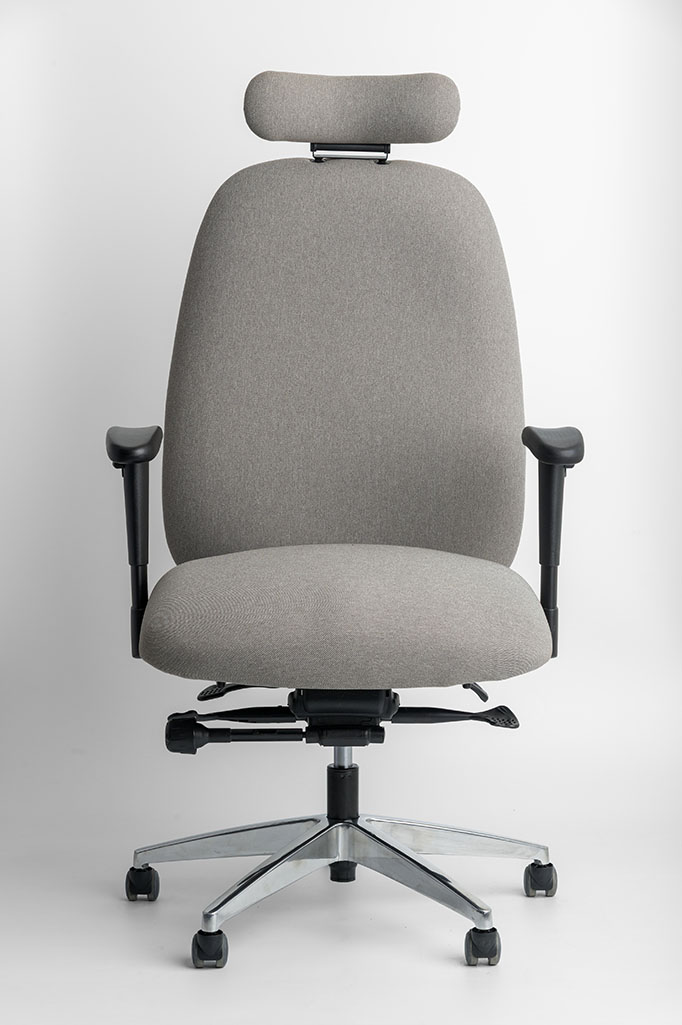
Ergochair Adapt 700
Built to adapt, because every individual’s needs are different. Manufactured in the UK, rated up to 250kg and configurable around individual requirements by our expert assessment team.
250kg (40 stone) capacity | 620mm seat width | Independent seat and back adjustment | 2.5:1 synchronous tilt | Extra-dense composite foam cushioning
Built for higher demands
Reinforced components, thicker boards and heavier-duty steel bracketry provide strength and durability throughout the chair.
Support where it matters
Specialist foam construction helps provide consistent support and pressure distribution throughout the working day.
Designed for comfortable movement
A tilt mechanism developed for larger users helps the chair move comfortably with the person sitting in it.
Why Ergochair
- Specialist tailored seating
- Individually assessed
- Made in the UK
- Over 100,000 chairs sold
- King’s Award winner 2026 for Innovation

Finding the right chair starts with assessing individual needs
For people who need high-capacity seating, choosing the right bariatric chair involves much more than taking a weight and a few measurements. An Ergochair assessment looks at the whole picture: the person’s body dimensions, mobility, strength, comfort and support needs; how they sit, move and transfer; the work they do; and the workstation and environment around them.
Assessors use that understanding to identify what the chair needs to do for you. It’s this combination of lived experience and specialist knowledge that allows the chair to be configured around the individual, rather than simply selected from a specification sheet.
We’re thinking about the biology, the psychological and emotional factors, and the environment and job demands. It’s not about making assumptions. The person is the expert in their own health and their own condition.
Find the chair that fits properly
Talk to a seating specialist.
Finding the right chair starts with understanding your unique needs. Talk to our expert team and we’ll help you find a chair that fits your body, your work and the way you need to sit.
Frequently asked questions
What is a bariatric office chair?
A bariatric office chair is designed for larger users who may need more space, greater strength or different dimensions than a standard office chair provides.
Is a bariatric chair just a wider office chair?
No. Width is important, but it’s only one part of getting the fit right.
What weight capacities are available?
Bariatric and heavy-duty office chairs are available in a range of weight capacities. Ergochair’s Adapt 700 is rated up to 250kg.
Is weight capacity the most important thing to look for?
Weight capacity matters, but it doesn’t tell you whether a chair will fit.
How do I know if my current office chair is unsuitable?
Common signs include feeling squeezed or restricted around the hips and legs, discomfort or pain while sitting, struggling to remain comfortable for as long as you used to, or feeling that the seat and backrest don’t support you properly.
Can I just buy a heavy-duty office chair online?
For some people, an off-the-shelf heavy-duty chair will be perfectly suitable.
Do I need an assessment before buying a bariatric chair?
Not everyone will need a specialist assessment, but it can be particularly useful when you have specific postural, mobility, comfort or health needs, or when previous chairs haven’t worked.
Do I need to be above a certain weight to use a bariatric chair?
Not necessarily.
What should I look for in a bariatric office chair?
Start with the basics – appropriate weight capacity, seat width and depth, back support, armrest positioning, stability and adjustability.
Can a bariatric chair be funded through Access to Work?
Potentially. Access to Work can provide grants towards specialist workplace equipment for eligible people with a disability or health condition.
Does my employer have to provide suitable seating?
Employers have a legal duty to make reasonable adjustments for disabled employees where they would otherwise be substantially disadvantaged. This can include providing or adapting workplace equipment.
Does my employer have to provide a bariatric office chair for home or hybrid working?
Not automatically. Employers have a legal duty to assess workstation risks and provide suitable equipment where reasonably required.